
Radio Spot – Ebola Vaccination
This radio spot in 9 languages discusses the importance of vaccination to protect against the spread of Ebola and EVD. Radio scripts are available in French and English.
Sources:


This radio spot in 9 languages discusses the importance of vaccination to protect against the spread of Ebola and EVD. Radio scripts are available in French and English.
Sources:
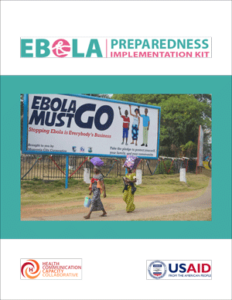 Now also available in French, this toolkit developed by CCP provides national and local stakeholders, as well as program managers, with key considerations and a roadmap for instituting and implementing critical, relevant, practical and timely communication for responding to the threat of an Ebola Virus Disease (EVD) outbreak. The I-Kit guides countries in social and behavior change communication (SBCC) and risk communication activity planning, including communication plan development for every stage of an Ebola response. For any country facing a major health crisis, national preparedness plans need to include and support communication efforts. Integration of communication into the preparedness agenda from the outset ensures that preparedness communication is harmonized, relevant, timely, financially supported and aligned among all of the preparedness technical teams. Robust national communication preparedness plans maximize the effectiveness of Ebola communication and equip communication trainers and experts with a common set of tools and modules.
Sources:
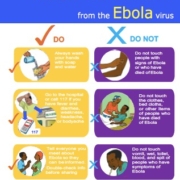
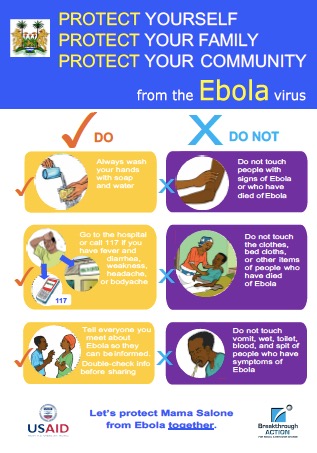 This poster illustrates the correct ways to protect against Ebola. For example: do not touch people with signs of Ebola or who have died of Ebola, but instead always wash your hands with soap and water.
Source: Ebola Do’s and Don’ts Poster
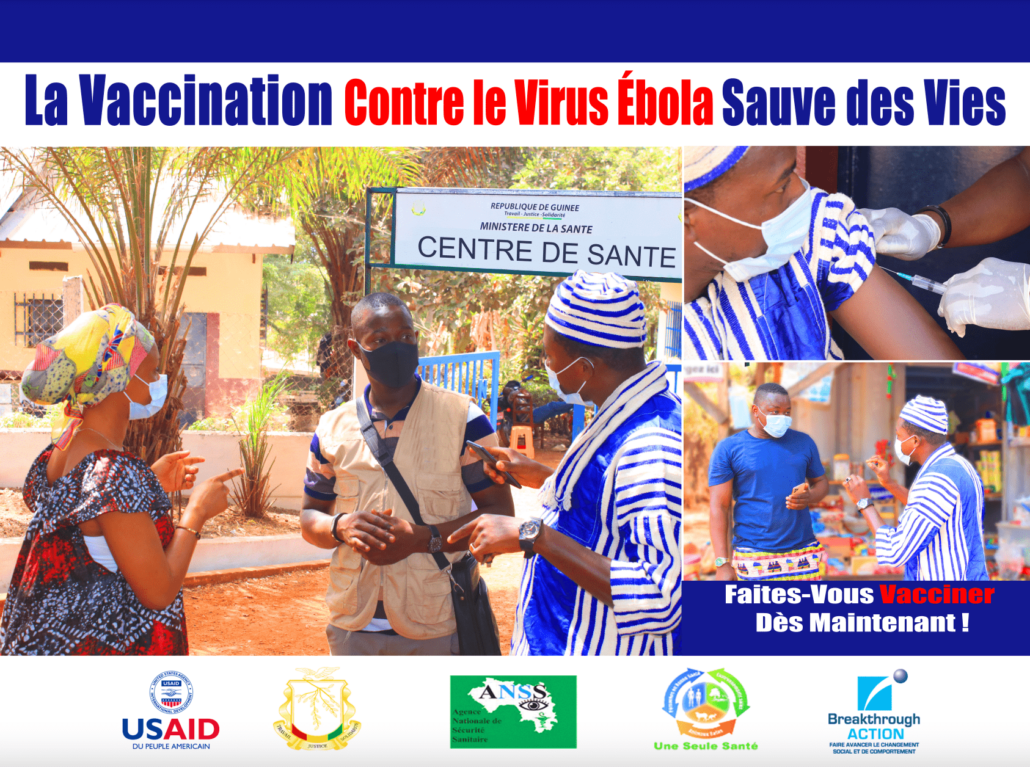 These visuals are used as billboards to encourage communities to get vaccinated, and are available in various sizes and formats.
Sources:

 These two radio spots target female and male heads of households in 9 languages, discussing how families can protect themselves against Ebola. French and English scripts are available.
Sources:
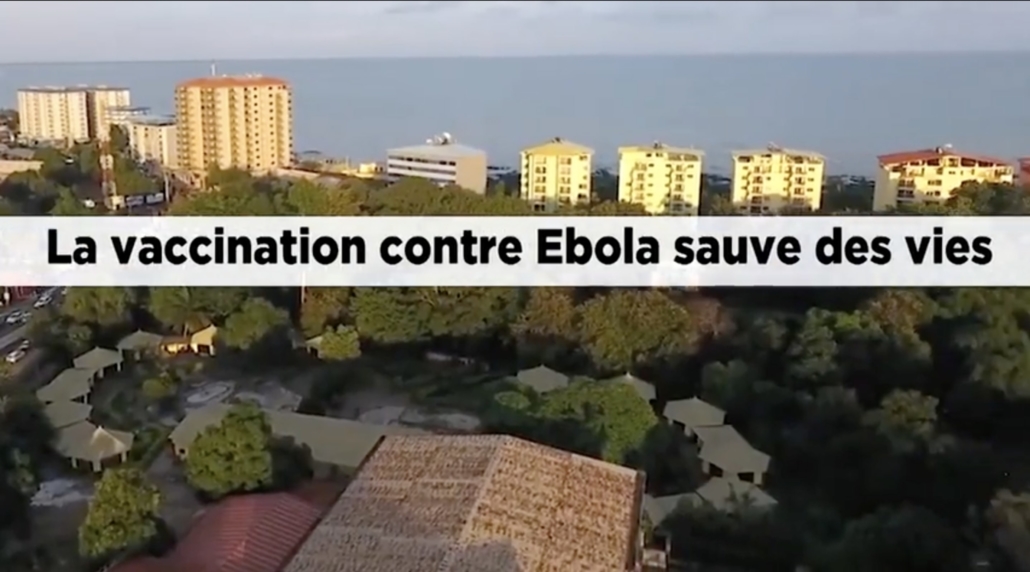 This video from Guinea discusses the importance of vaccination in the prevention of Ebola, produced in French and 5 local languages.
Sources:

 This journal article examines structured community engagement initiatives and real-time monitoring of community engagement activities during large-scale epidemics. Researches analysed the Community Led Ebola Action (CLEA) approach implemented through the Social Mobilization Action Consortium (SMAC) during the 2014–2016 Ebola epidemic in Sierra Leone, demonstrating how large-scale, coordinated community engagement interventions can be achieved and monitored in real-time during future Ebola epidemics and other similar epidemics.
Source: Community engagement in outbreak response: lessons from the 2014–2016 Ebola outbreak in Sierra Leone

 This radio spot addresses the topic: “Why avoid direct contact during an Ebola outbreak?”, and is produced in 5 languages (French, Swahili, Kikongo, Lingala and Tshiluba).
Sources:

The Ebola Communication Network was originally developed by the Health Communication Capacity Collaborative (Cooperative Agreement #AID-OAA-A-12-00058) and expanded under Breakthrough ACTION (Cooperative Agreement #AID-OAA-A-17-00017) both under the leadership of Johns Hopkins Center for Communication Programs. This website is now maintained by Johns Hopkins Center for Communication Programs and its contents are the sole responsibility of CCP. The contents of this website do not necessarily reflect the views of USAID, the United States Government, or Johns Hopkins University.
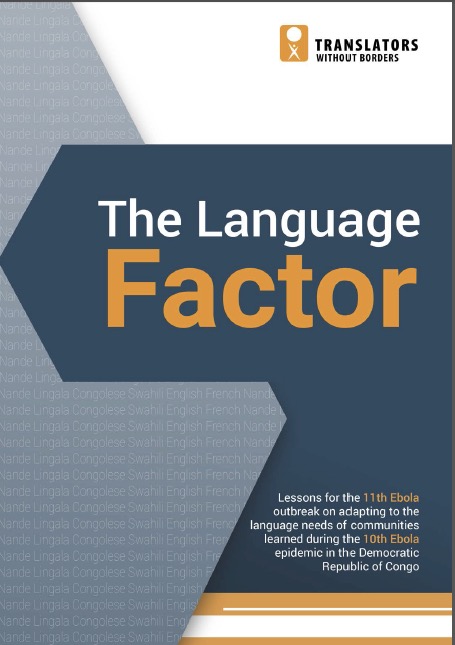 This resource provides lessons from previous Ebola outbreaks in the DRC on adapting to the language needs of communities and centers language as a key trust builder between communities and public health experts.
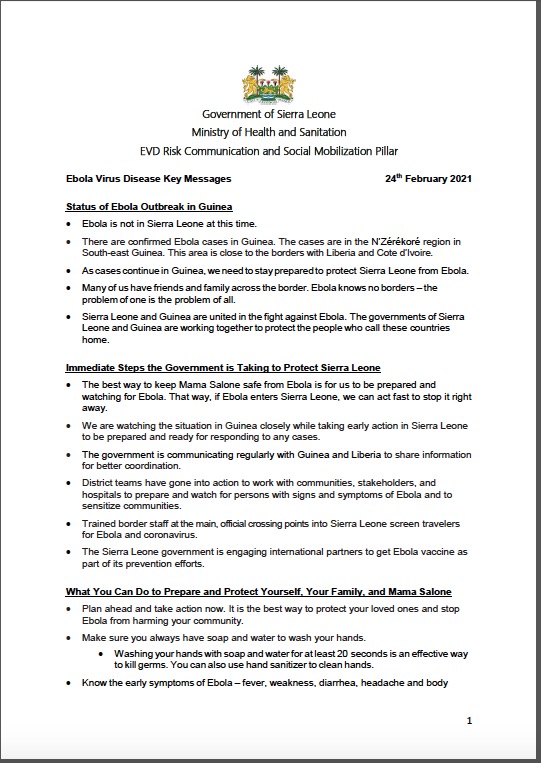 2021- Developed by the Government of Sierra Leone, this resource features facts about Ebola, prevention, signs and symptoms, treatment and how to distinguish between COVID-19 and Ebola Virus Disease.