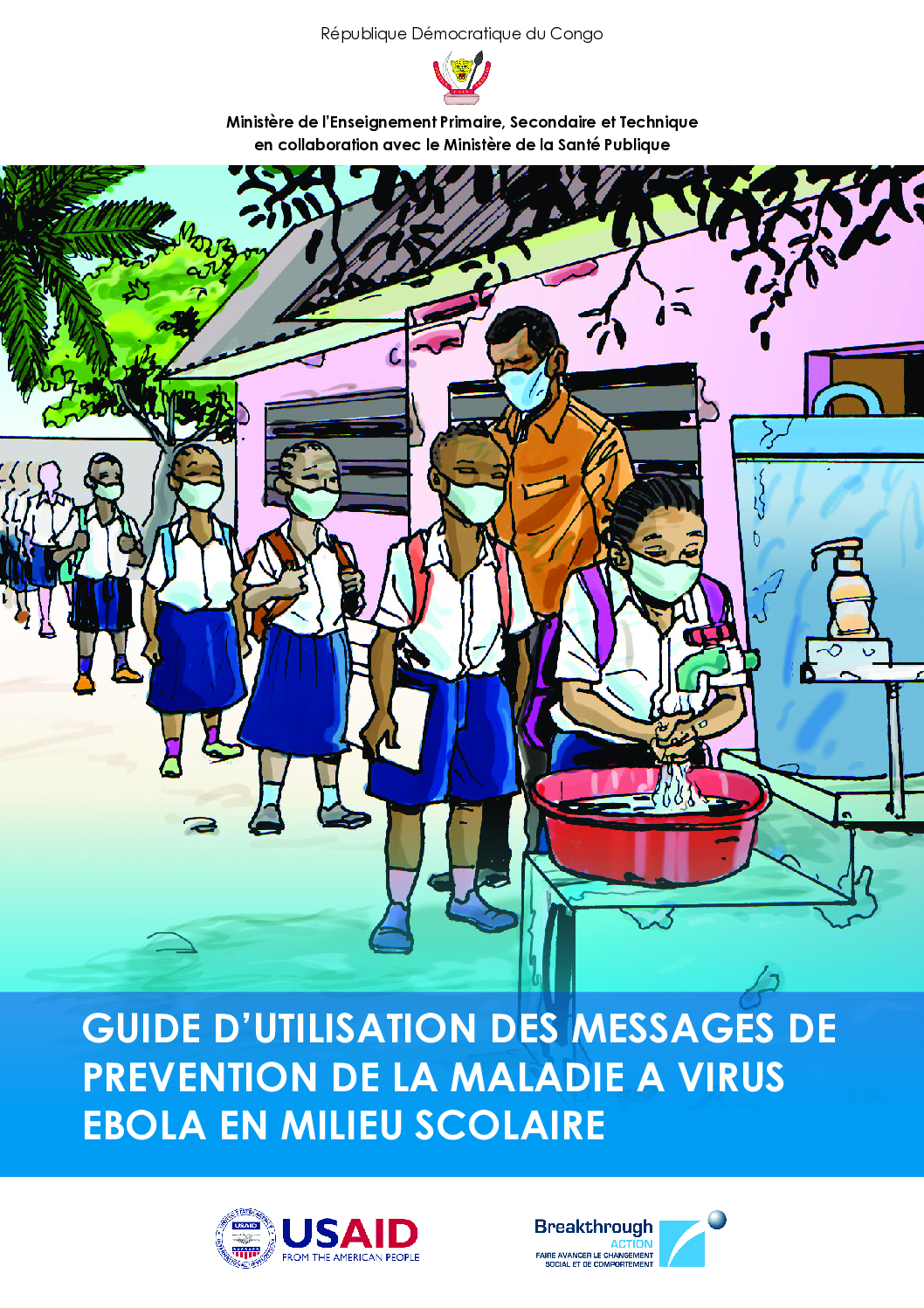

Guide d’utilisation des messages de prévention de la maladie à virus Ebola en milieu scolaire, République démocratique du Congo

Ce guide, élaboré par le Ministère de l’Enseignement Primaire, Secondaire et Technique en collaboration avec le Ministère de la Santé Publique et avec l’appui de Breakthrough ACTION, fournit des orientations aux enseignants et aux responsables scolaires pour l’utilisation de messages éducatifs visant la prévention de la maladie à virus Ebola en milieu scolaire. Il présente des informations sur Ebola, la COVID-19, d’autres zoonoses et les maladies d’origine hydrique, ainsi qu’une série de messages adaptés à différents publics (élèves, enseignants, parents et autorités scolaires) afin de promouvoir des comportements favorables à la santé et à la prévention des maladies.

Guide- Ebola – Milieu Scolaire- RDC

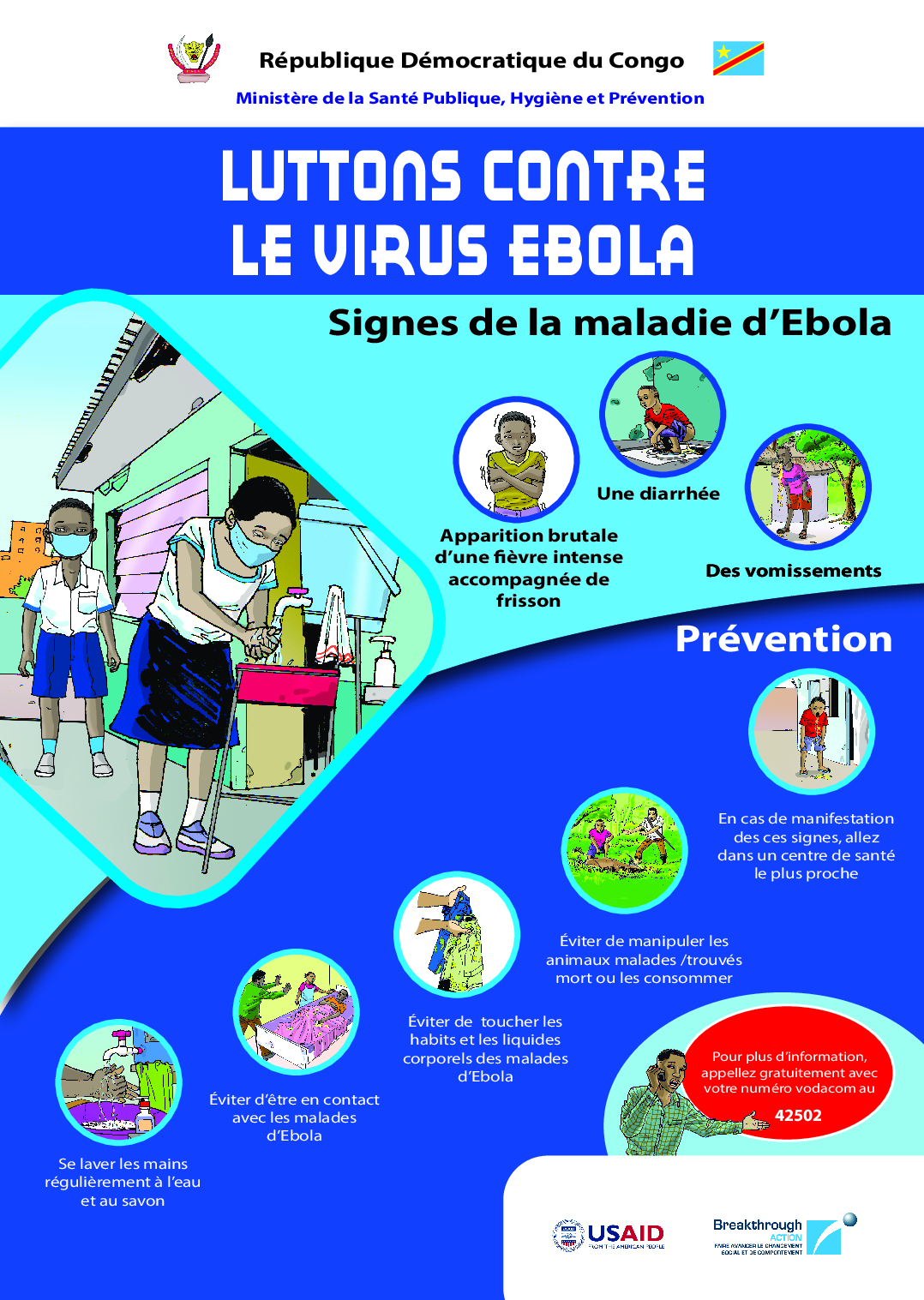
Luttons Contre l’Ebola-Affiche & Roll Up

Cette affiche du Ministère de la Santé Publique, Hygiène et Prévention de la République démocratique du Congo sensibilise la population à la maladie à virus Ebola en présentant ses principaux signes, notamment la fièvre soudaine accompagnée de frissons, la diarrhée et les vomissements. Elle met également en avant des mesures de prévention essentielles, telles que l’évitement des contacts avec les personnes malades, leurs effets personnels ou liquides corporels, ainsi qu’avec les animaux malades ou trouvés morts. L’affiche encourage le lavage régulier des mains, la consultation rapide d’un centre de santé en cas de symptômes et fournit un numéro gratuit pour obtenir davantage d’informations.


Luttons Contre l’Ebola-Affiche


Luttons Contre l’Ebola-Affiche Luttons Contre l’Ebola- Roll Up

Zero Ebola

Zero Ebola: 90-day Surveillance

This video addresses the 90-day surveillance period for EVD. Three videos features a female doctor explaining how and why communities must remain vigilant during this 90-day period, in French and three local languages (Soussou, Poular, and Malinke). One video features a male doctor in French only.

Sources:

Ebola Rumor Management Guide

This guide is aimed at community-level actors conducting Ebola preparedness activities. It covers key elements of general rumor management as well as specific rumors and possible responses to those rumors and includes a set of practical tools at the end.

Source: Ebola Rumor Management Guide – Francais

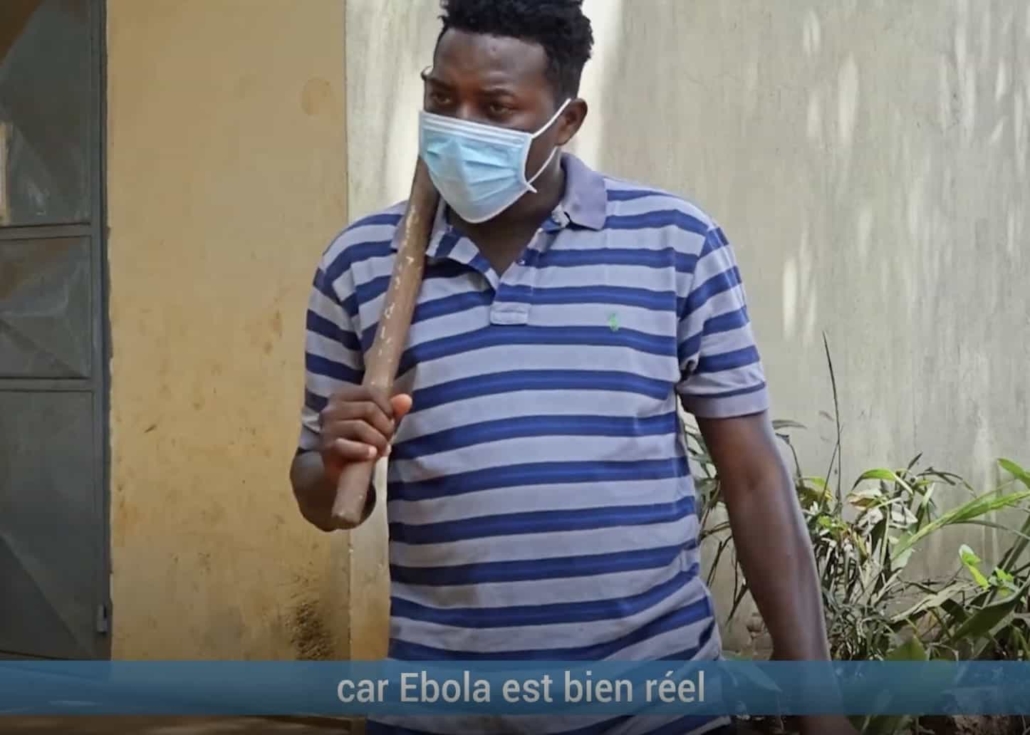
Social media post: signs and symptoms of Ebola (Fever, diarrhea, vomiting, fatigue, abdominal pain, headache and sore throat

Social Media Post- Ebola Signs and Symptoms

Social media post: signs and symptoms of Ebola (Fever, diarrhea, vomiting, fatigue, abdominal pain, headache and sore throatThis social media posts features illustrated signs and symptoms of EVD.

Source: Social Media Post – Signs and Symptoms

A man in Guinea talking about Ebola

Ebola Video – Guinea (Male heads of households)

A man in Guinea talking about EbolaThis video discusses how Ebola is transmitted and how families can protect themselves against EVD. This video is available in seven languages.
Sources:

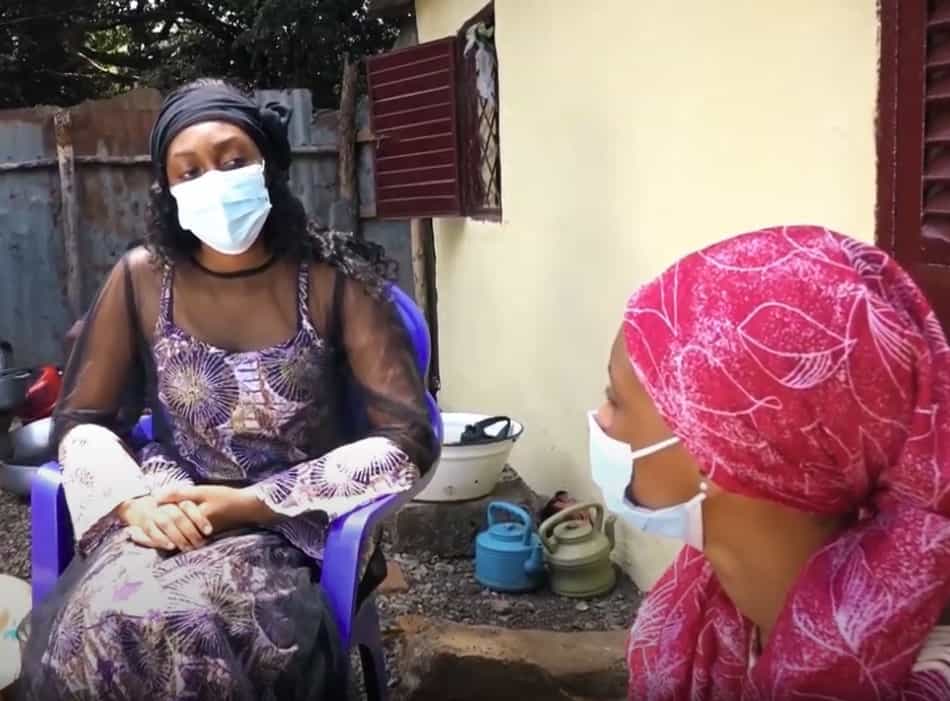
A women in Guinea talking about Ebola

Ebola Video – Guinea (Women and Female heads of Households)

A women in Guinea talking about EbolaThis video from Guinea discusses how families can protect themselves against EVD and prevent the spread of Ebola. The video is available in seven languages.

Sources:

Image of a radio

Radio Spot – Ebola Vaccination

This radio spot in 9 languages discusses the importance of vaccination to protect against the spread of Ebola and EVD. Radio scripts are available in French and English.

Sources:

Ebola Communication Preparedness Implementation Kit

Ebola-Comm-Preparedness-Kit-1Now also available in French, this toolkit developed by CCP provides national and local stakeholders, as well as program managers, with key considerations and a roadmap for instituting and implementing critical, relevant, practical and timely communication for responding to the threat of an Ebola Virus Disease (EVD) outbreak. The I-Kit guides countries in social and behavior change communication (SBCC) and risk communication activity planning, including communication plan development for every stage of an Ebola response. For any country facing a major health crisis, national preparedness plans need to include and support communication efforts. Integration of communication into the preparedness agenda from the outset ensures that preparedness communication is harmonized, relevant, timely, financially supported and aligned among all of the preparedness technical teams. Robust national communication preparedness plans maximize the effectiveness of Ebola communication and equip communication trainers and experts with a common set of tools and modules.

Sources:

Ebola Do's and Don'ts Poster

Ebola Do’s and Don’ts Poster

Ebola Do's and Don'ts PosterThis poster illustrates the correct ways to protect against Ebola. For example: do not touch people with signs of Ebola or who have died of Ebola, but instead always wash your hands with soap and water.

Source: Ebola Do’s and Don’ts Poster