WHO/UNICEF Key Messages for Social Mobilization (MENDE)
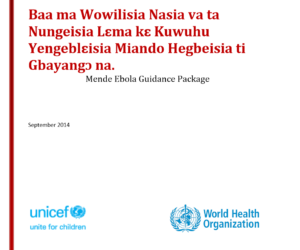 WHO/UNICEF Key Messages for Social Mobilization in Ebola Affected Countries translated in Mende by Translators without Borders.


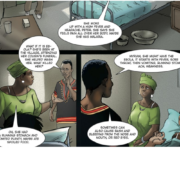
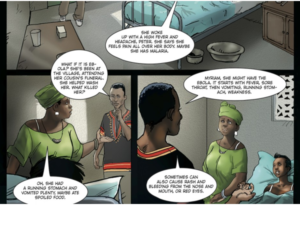 The first of a series of graphic stories about Ebola that covers prevention and seeking early care. This tool is used by IOM and county based partners to raise awareness and encourage positive responses within communities in Liberia. It . It was developed with the guidance of the Ministry of Health and Social Welfare, WHO and UNICEF.
Download the full version here Comic Book: Ebola_ Spread the Message, Not the Virus
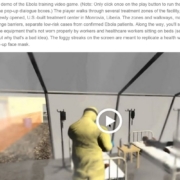
Information for service members about the West African Ebola virus disease outbreak.
[youtube http://www.youtube.com/watch?v=677xOF9Iua4]
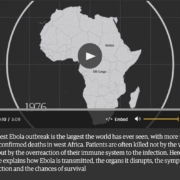
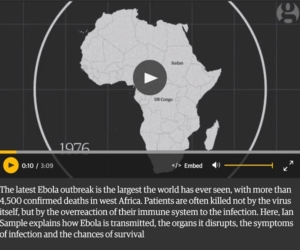 The latest Ebola outbreak is the largest the world has ever seen, with more than 4,500 confirmed deaths in west Africa. Patients are often killed not by the virus itself, but by the overreaction of their immune system to the infection. Here, Ian Sample explains how Ebola is transmitted, the organs it disrupts, the symptoms of infection and the chances of survival.
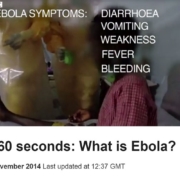
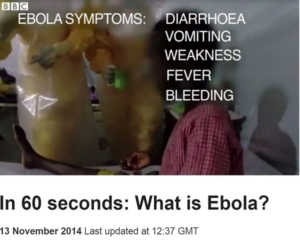 The Ebola outbreak in West Africa is the deadliest occurrence of the disease since its discovery in 1976.
BBC News explains why the disease is so dangerous – in 60 seconds.

Everyone knows that Ebola kills, but what exactly does it do? This video by Dr. Michael Smith explains the science behind how Ebola attacks the body.

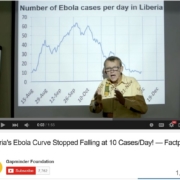
This trend shows daily new cases confirmed by blood samples; not all suspected and probable cases. Since August the trend went up above 60 and then back down. But not to zero. It stayed around 10 new cases per day. The hunt can not stop until it reaches zero.
[youtube http://www.youtube.com/watch?v=6zoC2JMgttw&w=560&h=315]
The Ebola Communication Network was originally developed by the Health Communication Capacity Collaborative (Cooperative Agreement #AID-OAA-A-12-00058) and expanded under Breakthrough ACTION (Cooperative Agreement #AID-OAA-A-17-00017) both under the leadership of Johns Hopkins Center for Communication Programs. This website is now maintained by Johns Hopkins Center for Communication Programs and its contents are the sole responsibility of CCP. The contents of this website do not necessarily reflect the views of USAID, the United States Government, or Johns Hopkins University.