NIH Emergency Access Initiative Resources
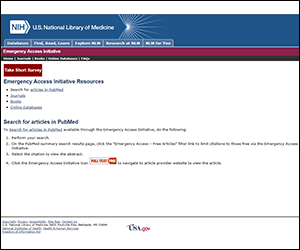 Access to the U.S. National Library of Medicine for Ebola resources.


Access to the U.S. National Library of Medicine for Ebola resources.
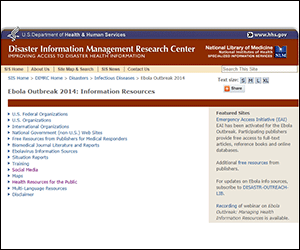 A website from the U.S. Department of Health & Human Services with information on the 2014 Ebola outbreak.
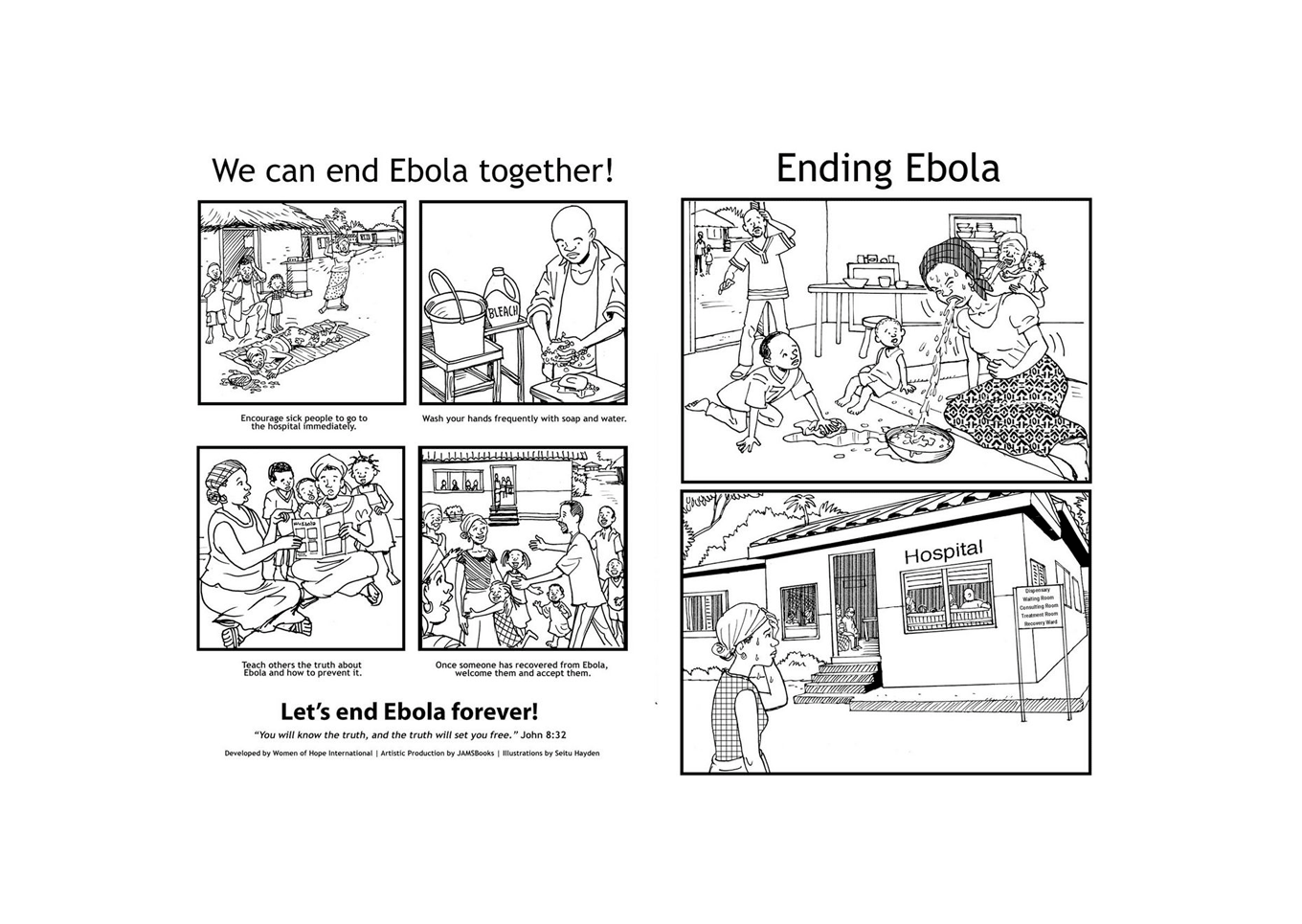 This health lesson on the transmission and prevention of Ebola from the context of West African thought utilizes story and participatory methods to help people embrace the concepts presented. It is designed to be used in a small group setting with participation from the learners, and accompanies the Ending Ebola picture booklet. This lesson is available in English and French. All resources can be viewed and downloaded here.
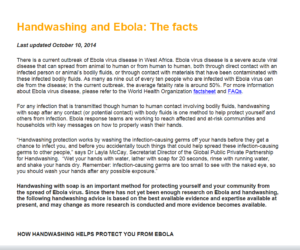 What is the role of handwashing in fighting Ebola? This fact sheet provides an overview of what we currently know.
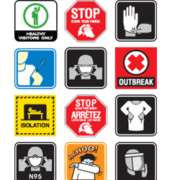
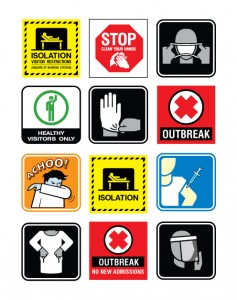 This is a collection of symbols for communicating infection control situations and best practices, from simple hand hygiene reminders to warnings of outbreak or isolation situations. From the documentation:
“After years of development we realized that our infection control symbols had the potential to be this common language for public health. So, we compiled it in this package and are releasing it under Creative Commons in order to increase awareness, reduce barriers to implementation and ultimately be available where needed to save lives. The world needs to
speak the same language when it comes to infection control.
This package contains the complete set of symbols in several different computer file formats and is made to be shared via the internet.”
Project and documentation at: http://www.taggcleanhands.com/icsymbolpack
Picture booklet designed for low literacy audiences in West Africa discussing the transmission and prevention of Ebola. Designed to be used in conjunction with the participatory health lesson. Available in English, French, and a “shell format” that can have captions translated into any local language. All resources viewable and downloadable fro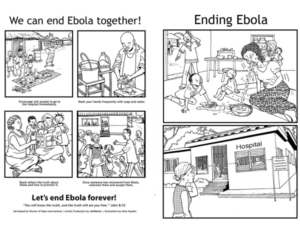 m here.
 An online collection of Lancet articles and other resources for health professionals.
 The WHO Regional Office for Africa has worked closely with public health leaders and subject-matter experts in the region and partner organizations to draw up and design this framework to serve as a concise and easy-to-use technical and managerial guide for senior level decision-makers and members of national emergency management committees (EMCs) and rapid response teams (RRTs) in member states.

The Ebola Communication Network was originally developed by the Health Communication Capacity Collaborative (Cooperative Agreement #AID-OAA-A-12-00058) and expanded under Breakthrough ACTION (Cooperative Agreement #AID-OAA-A-17-00017) both under the leadership of Johns Hopkins Center for Communication Programs. This website is now maintained by Johns Hopkins Center for Communication Programs and its contents are the sole responsibility of CCP. The contents of this website do not necessarily reflect the views of USAID, the United States Government, or Johns Hopkins University.