CDC: Together We Can Prevent Ebola
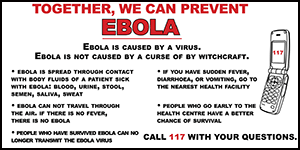 Banner including information on how to prevent Ebola and its spread.


Banner including information on how to prevent Ebola and its spread.
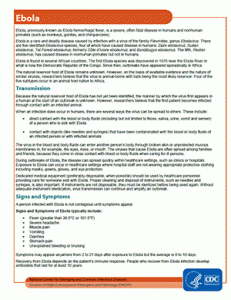 Find out how Ebola is transmitted and its signs and symptoms.
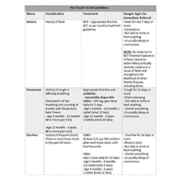
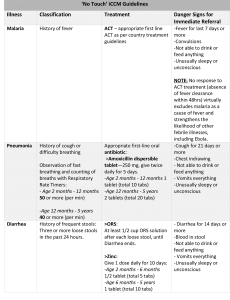 Adapted ICCM Guidelines Guidelines for a revised implementation of Integrated Community Case Management of Childhood Illnesses (ICCM) during the Ebola outbreak. Updated by UNICEF and WHO September 5, 2014.
CDC Infographic with facts about Ebola transmission in Spanish.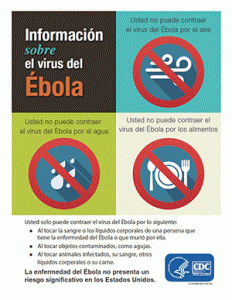
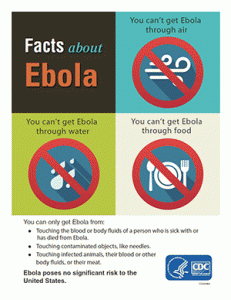
CDC Infographic with facts about Ebola transmission.
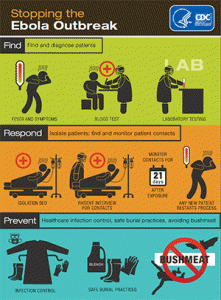 This poster’s audience is the general community in Sierra Leone. It shows signs and symptoms of Ebola and clearly calls people with symptoms to go to a health facility. It has a clear call to action, includes a phone number to call for help, and good use of graphics that makes it appropriate for low-literacy populations.
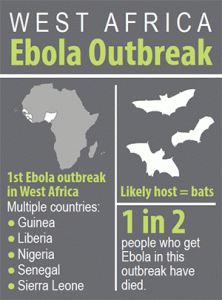 CDC Infographic with basic information on Ebola’s cause, spread, means of transmission and symptoms.
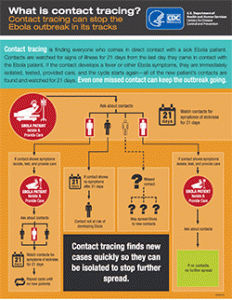 CDC Infographic describing contact tracing protocol in the Ebola response.

 Videos from the Centers for Disease Control and Prevention (CDC) on the Ebola outbreak.

 Three public service announcements (PSAs) by former U.S. President Jimmy Carter on Ebola stigma, contact tracing and resilience.

The Ebola Communication Network was originally developed by the Health Communication Capacity Collaborative (Cooperative Agreement #AID-OAA-A-12-00058) and expanded under Breakthrough ACTION (Cooperative Agreement #AID-OAA-A-17-00017) both under the leadership of Johns Hopkins Center for Communication Programs. This website is now maintained by Johns Hopkins Center for Communication Programs and its contents are the sole responsibility of CCP. The contents of this website do not necessarily reflect the views of USAID, the United States Government, or Johns Hopkins University.