

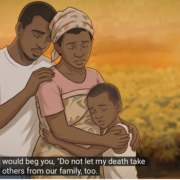
Do Not Let My Death from Ebola Take You Too
Do Not Let My Death From Ebola You Too is a deeply moving animated video created by Chocolate Moose Media (https://chocmoose.com/), written and directed by Firdaus Kharas, OC, for Harper Hill Global (https://www.harperhill.global/). The video speaks directly to families and communities facing one of the most painful realities of Ebola: the death of someone they love. It is currently available in East Africa English, Uganda English, French, Congolese Swahili, Lingala, Luganda, and Lugbara in low and high resolution.
With tenderness, dignity and emotional clarity, the video acknowledges the natural human desire to bring a loved one home, to hold them, to wash the body, to kiss them goodbye and to honor them according to familiar traditions. But it then delivers a lifesaving message: with Ebola, love must be expressed differently. The last act of love is not touch. It is protection.
The video explains, in a compassionate and culturally sensitive way, that Ebola can hide inside grief. It can spread through the very acts that normally express devotion: an embrace, a washing, a final kiss. Rather than blaming families or attacking tradition, the video reframes safe burial as an act of love, faith and honour. It reassures viewers that the soul of the person who has died is not dishonoured when trained hands carry the body safely. God sees the love, the tears, the prayers and the goodbye spoken from a distance.
This is public health communication at its most humane. It does not lecture. It comforts. It does not frighten people into obedience. It helps them understand that protecting the living is the final gift they can give to the dead.
The message is simple, urgent and unforgettable: Honor the dead. Protect the living. Let love save lives.
The video is free to view, download and use, making it a powerful resource for churches, clinics, schools, community health workers, broadcasters, humanitarian organizations, local leaders and families in Ebola-affected communities.
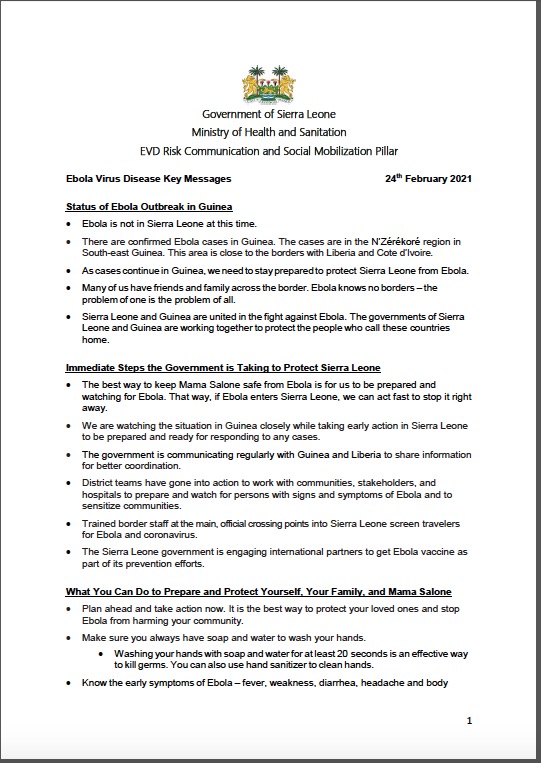 2021- Développée par le gouvernement de la Sierra Leone, cette ressource présente des faits sur Ebola, la prévention, les signes et symptômes, le traitement et comment faire la distinction entre COVID-19 et la maladie à virus Ebola.
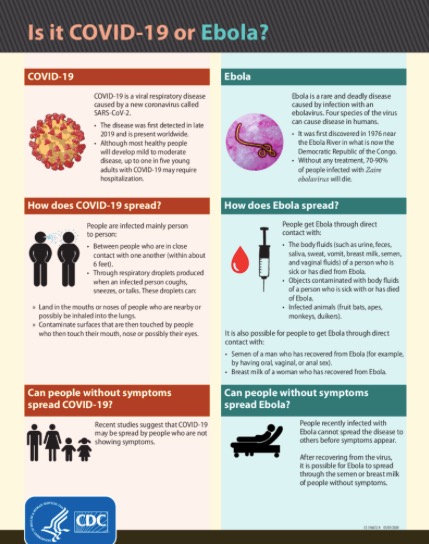 Cette fiche d'information fait la distinction entre Covid-19 et Ebola en termes de cause, de transmission, de signes et symptômes et de facteurs de risque.
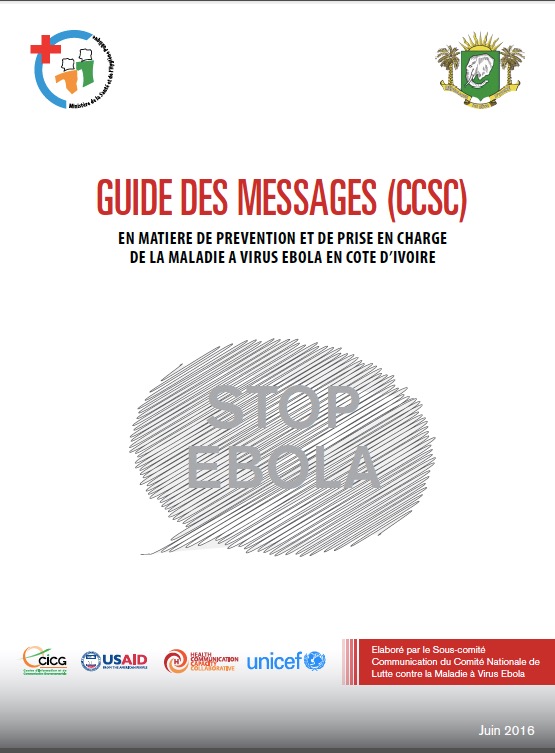 Ce guide de messages a été réalisé en juin 2016 pour renforcer la coordination des différentes interventions d'information et d'éducation développées pour sensibiliser sur l'épidémie d'Ebola en Côte d'Ivoire.
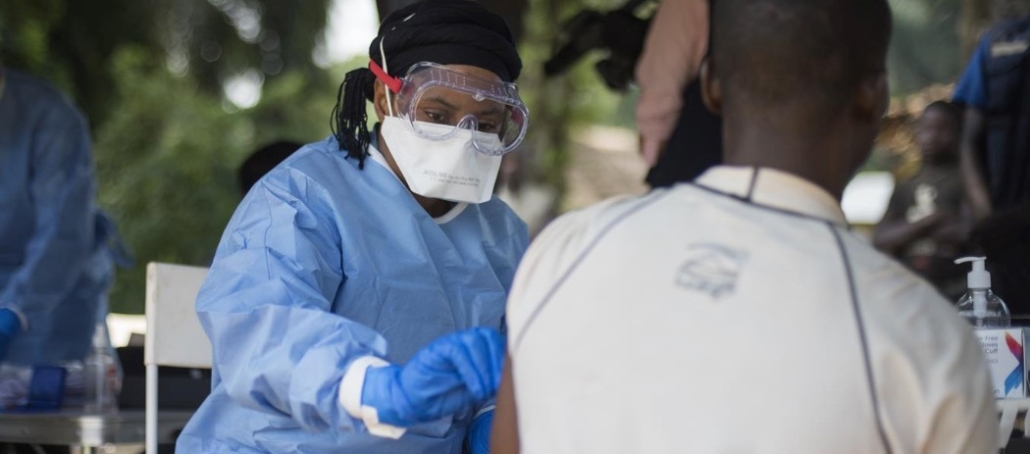
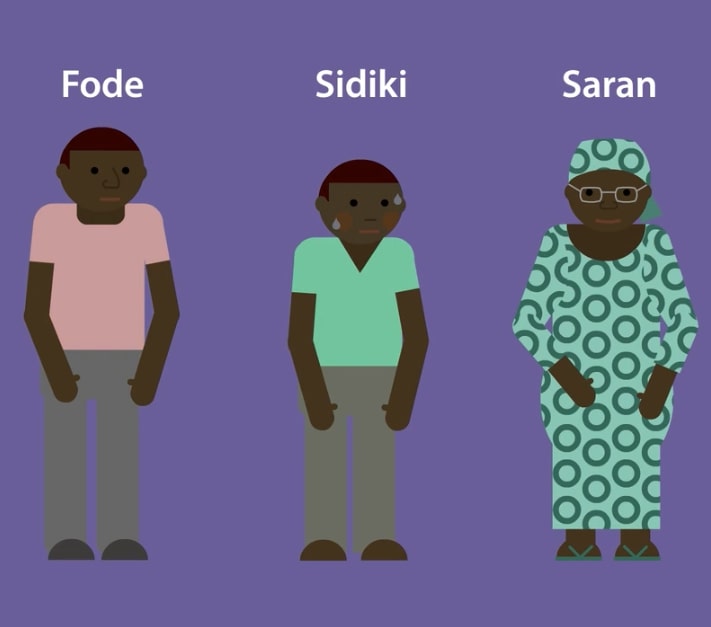 Ce film traite du rôle des agents de santé communautaires dans leur travail essentiel de « recherche des contacts » pour prévenir la propagation d'Ebola. Il explique le rôle des traceurs de contact dans la recherche de personnes qui ont été en contact avec un patient atteint d'Ebola et dans la sensibilisation pour aider à arrêter la transmission de la maladie.
 Cette fiche d'information de l'OMS sur Ebola (2021) fournit des informations complètes sur Ebola, couvrant la transmission, les symptômes, la prévention et le contrôle, le vaccin, les soins aux personnes guéries d'Ebola et la réponse de l'OMS.
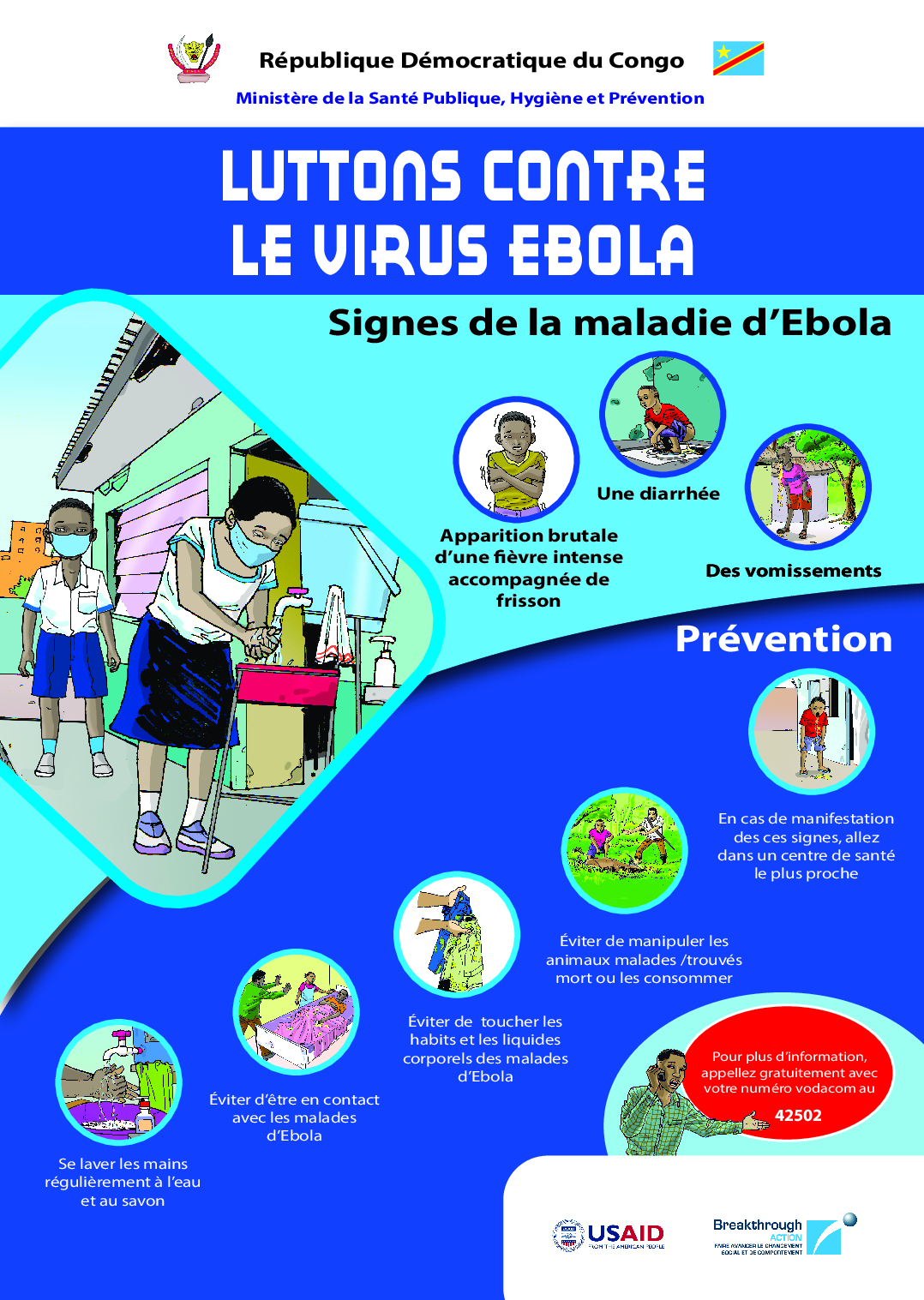
 Cette vidéo de la République démocratique du Congo fournit des informations sur les symptômes de la maladie d'Ebola, comment elle se transmet et comment nous pouvons aider à arrêter sa transmission.